Showing posts with label Gezer Dig 2013. Show all posts

Wednesday, June 12, 2013

June 12: The Dig is Complete - Update 12


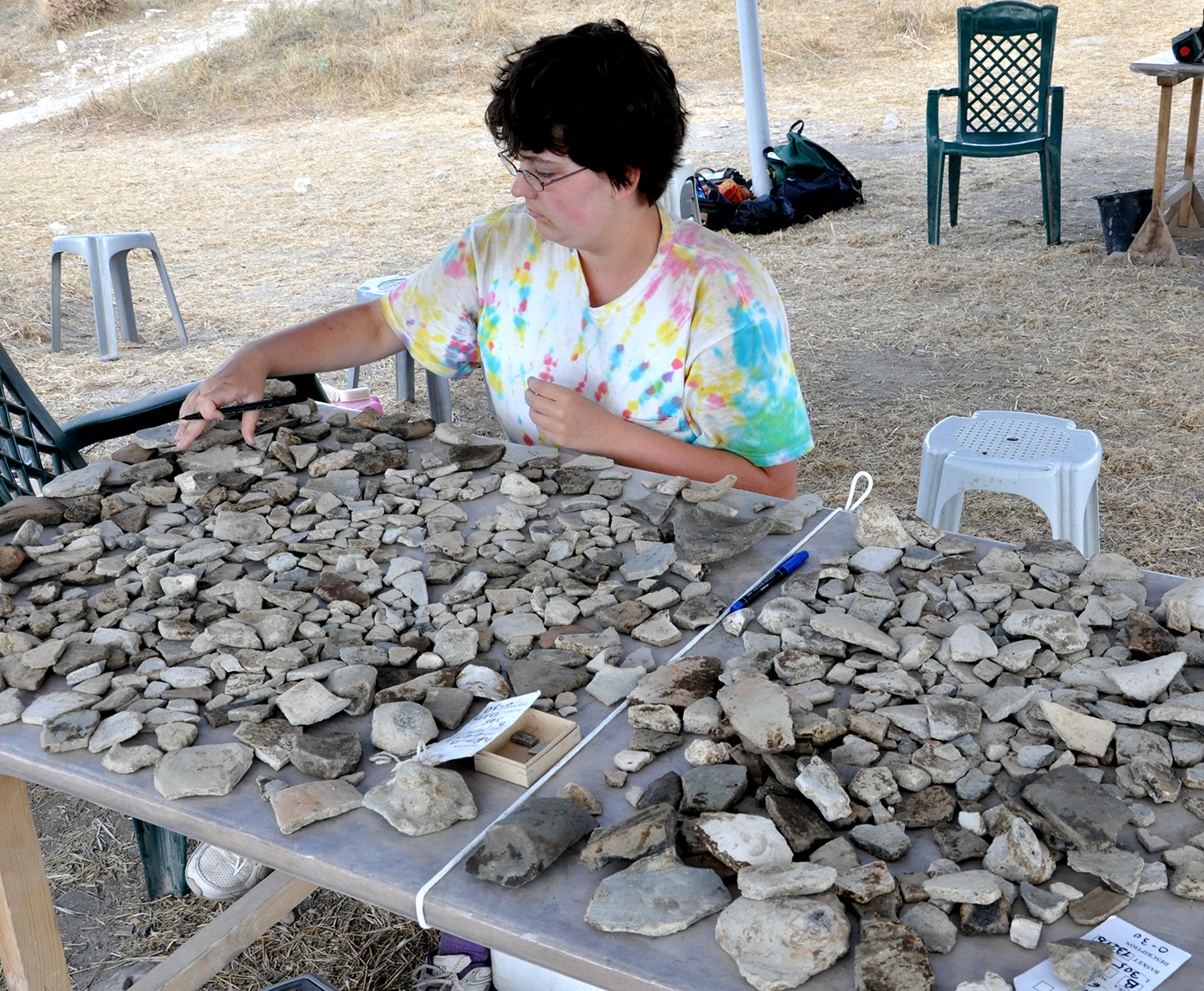
The 2013 Gezer Dig has come to an end. As I write, the last pottery is being sort and the site is being cleaned and secured. As Dr. Dan Warner mentions in the video, the project will take one more year to complete. However, we made tremendous progress this year's dig was a huge success. We have dateable pottery to analyze and a plan of attack for next season. Keep an eye on the blog for additional updates. We will release an article on this year's dig in the coming weeks and we will announce the dates for next year's dig as soon as those are available.

We want to offer our most gracious thanks to Dr. Tsvika Tsuk, chief archaeologist for the Israel Nature, who has co-directed the dig and to the Israel Nature and Parks Authority which has partnered with New Orleans Baptist Theological Seminary in this endeavor. Dr. Tsuk has shared his time and talents at the dig site and in the lecture hall, imparting his knowledge of archaeology with our group. We are thankful to count Tsvika Tsuk as a colleague and a friend.

In the coming days the members of our group will board jets headed for happy reunions with loved ones. Please pray for safe returns for the entire Gezer team.

Monday, June 10, 2013

June 10: Ditto – Update 11

By Gary D. Myers

Ditto yesterday’s post.

That is about all that would be needed to describe the work today. It was just about the same as yesterday. Work continued in all the same areas today – in the probes at the bottom, at the sifting table, at the pottery washing station and in the conservation areas. We did add one new wrinkle today. We started marking all the pottery found underneath MacAlister’s “causeway.” This pottery, sealed off from all the years of backfill after MacAlister, will be analyzed and used to date the water system.

Several of the probes at the bottom of the water system continue to render amazing amounts of pottery. The dig leaders are thrilled with the volume of pottery and other items coming out of the pool area under the causeway. In his writings, MacAlister noted that the pool area was very deep. He tried to measure the depth with a six-foot-long crowbar, but found that the pool was deeper than six feet. We are finding that he was correct about the depth of the pool at the bottom of the tunnel. It is very deep. Our crews have yet to find the bottom in two of the probes.


So tomorrow will probably be a lot like today and the day before. Digging, shifting, washing, sorting and marking. But this is real progress. All the previous dig seasons at the Gezer water system were leading to this moment. Hopefully, as the pottery is analyzed, conclusions can be reached about who built this impressive water system and when they built it. For now, we continue on, probing the depths of the Gezer water system.

Sunday, June 9, 2013

June 9: The End is Near – Update 10

By Gary D. Myers

Work has slowed considerably as the focus of the digging shifted to the three probes at the very bottom of the water system. Last Wednesday the team cut through what is believed to be a causeway of stone laid be R.A.S. MacAlister more than 100 years ago which enabled him to cross the very muddy, watery spot at the bottom. These three probe areas, untouched by MacAlister, have been fruitful in providing material that could help the team date the system. It will be some time before the dig leaders draw any conclusions from the material they have found. The pottery, seeds, charcoal and other items will all be studied and analyzed. Lab work is a very important part of any archaeological endeavor. So, as unfortunate as it is, it may be some time before the dig leaders can draw real conclusions about the site.

We want people here to know about this wonderful ancient water system and word is getting out. Today the site was visited by one of the Israeli television stations. A cameraman interviewed Tsvika Tsuk and shot video in the tunnel. We are hopeful that the Gezer dig will be featured on the news tonight or tomorrow.

Watching the Pros
For those of us on the dig who are amateur archaeologists, it has been a real treat to watch the professionals work (Tsvika Tsuk, Dan Warner, Jim Parker and Dennis Cole). Archaeology includes discipline, precision and creativity. It is both a science and an art. Archaeologists read the clues they are given like a detective, pulling out details from the evidence. They must have the ability to propose theories, hold those theories loosely, and revise them as needed. The goal is to let the material in the ground lead to the conclusions.

Work, Work, Work
Conservation work continued on the Bronze Age gate and the Canaanite wall today.  Both areas look remarkable. The work accomplished in the short time has been amazing. These areas, along with the Solomonic gate, the high place/standing stones and the water system, illustrate just how much potential there is at Gezer. This really is a great site with good exposure to multiple occupations from Canaanite to Israelite.
The most happening place on the entire dig site now is the shifting tent. For three days the shifting team has been busy finding objects dug from beneath the “causeway.” All these items are being carefully catalogued and will be analyzed as described above. Because the area is filled with mud, the team has to wet shift. It is a wet, muddy job.


The days are quickly ticking away. Everyone seemed tired today … not too tired to work, but some volunteers had a bit less spring in their steps. This seems to happen each year late in the dig as we all begin to feel the pull of home. Soon we will all be on our way back to our loved ones and all of our responsibilities back home. We have enjoyed our stay, but it will be good to be home. The majority of the group will be leaving this Friday and Saturday. Please pray for our safe returns.

Thursday, June 6, 2013

June 6: Digging Deeper – Update 9

By Gary D. Myers

Today was a great day at Gezer. The layers under R.A.S. MacAlister’s “causeway” of stones are yielding quite a bit of interesting pottery. The diggers excavating the three probes in the presumed water source sent a healthy supply of bags to the sifters today. The amount of material found in these areas is a great encouragement for the whole team.

Many questions remain at the Gezer water system and our team is working diligently to answer these questions. Is there an exit from the bottom of the system? Will we locate the water source? Is water still flowing at the bottom? Can a date for the construction of the water system by firmly established?

A Quick Survey
This year an NOBTS student (David) with a land survey background joined the dig team to gather data information about the water system. He will produce new drawings of the system. He spent the better part of week two establishing benchmarks and recording information about the top of the tel, the water passage (main shaft) and the cavern. Only here for one week, David has worked diligently to complete this time consuming job. Dig leaders believe the survey work will provide valuable information that will help them understand the water system.

Conservation and Cleaning

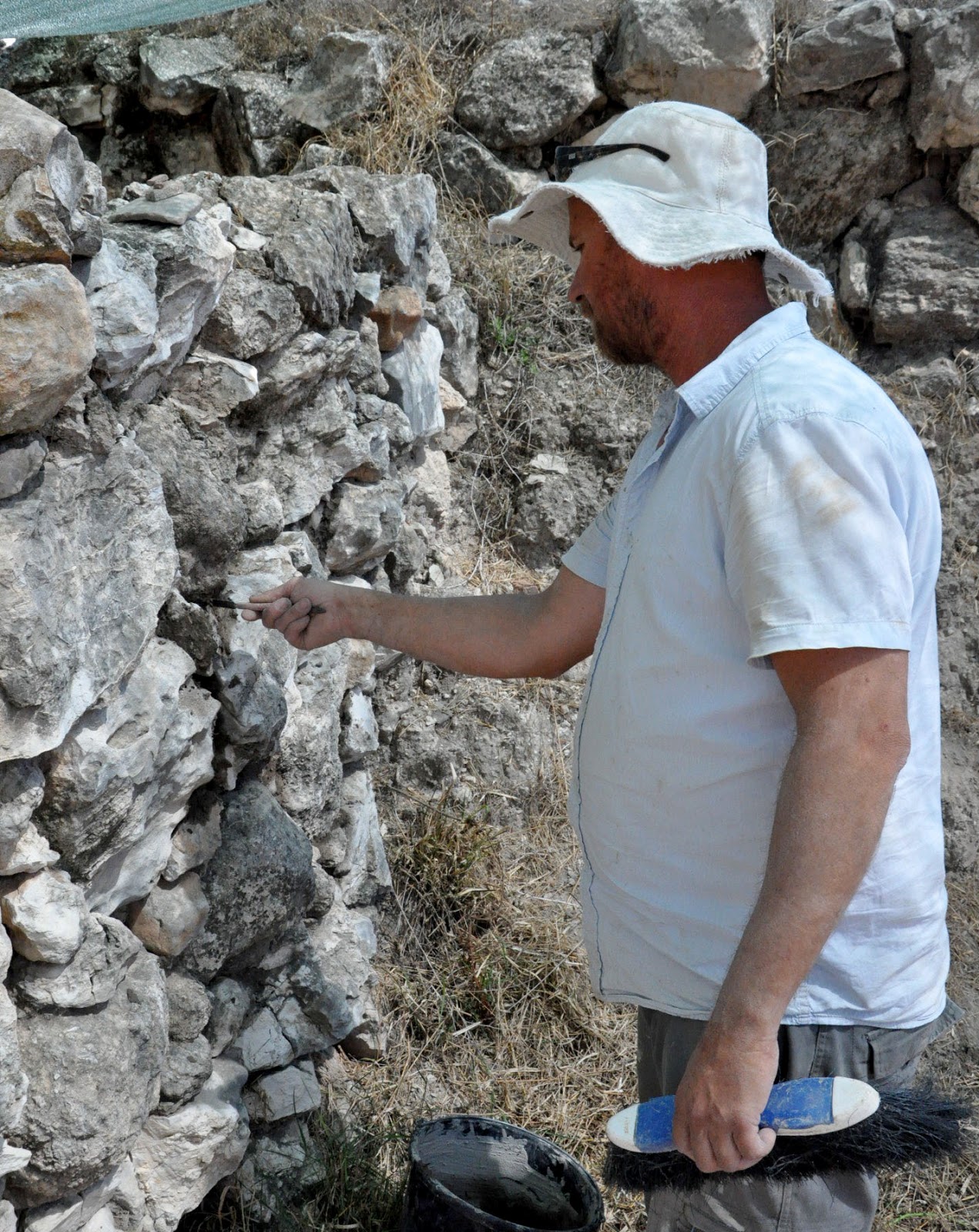
Larry and Paulette continue to work with the professional conservators at the Bronze Age wall/wall room restorations. The job is slow and requires a much attention to detail, but their work is becominh more noticeable each day.

Work continues at the Bronze Age gate complex as well. The team completed the cleaning of the third of five gate sections today. The team is hopeful that the whole gate cleaning project can be completed before the dig ends.

Both areas of conservation and cleaning are important examples from the time when Canaanites occupied Gezer. The TLC given at these locations will insure that generations to come will have the opportunity to see this wall section and learn about the people who once called Gezer home.

Final Stretch and Group Dynamics
It is hard to believe that only a week remains for this year’s Gezer water system dig. Time flies when you are having fun and when you are working hard.

We may not know how many of the questions about the water system will be answered or how many projects we will complete. One thing is sure, this group will work very hard these last days and will complete as many projects as possible in the time that is left. This group works hard and gets along well. It was exciting to see team fellowship and companionship develop over the past two weeks. The group members have been great Christian ambassadors in their interactions with each other and with the Israeli people. 

It is evident that our team members truly care about each other and want to be a part of the tasks we have been given. A small group of college students and recent high school graduates joined the dig this year and they have injected fresh joy and vibrant life into our work at Gezer and our leisure times as we fellowship together at Neve Shalom and tour the country. And while we will all be ready to return to our families, we will miss the new friends we have made and the old friendships we have rekindled during this dig.

Today’s Gezer Passage
2 Samuel 5:22-25

Once more the Philistines came up and spread out in the Valley of Rephaim; so David inquired of the Lord, and he answered, “Do not go straight up, but circle around behind them and attack them in front of the poplar trees. As soon as you hear the sound of marching in the tops of the poplar trees, move quickly, because that will mean the Lord has gone out in front of you to strike the Philistine army.” So David did as the Lord commanded him, and he struck down the Philistines all the way from Gibeon to Gezer.

--

The Gezer Water System project is co-sponsored by the Israel Nature and Parks Authority and New Orleans Baptist Theological Seminary under the direction of Tsvika Tsuk, chief archaeologist at INPA, and Dan Warner, co-director of the Center for Archaeological Research at NOBTS.

Wednesday, June 5, 2013

June 5: A Picture says a Thousand Words – Update 8

By Gary D. Myers

They say that a picture says a thousand words, so instead of typing a lot of words, here are “four thousand words” to start today’s post.

Cleaning the Causeway
MacAlister's Causeway
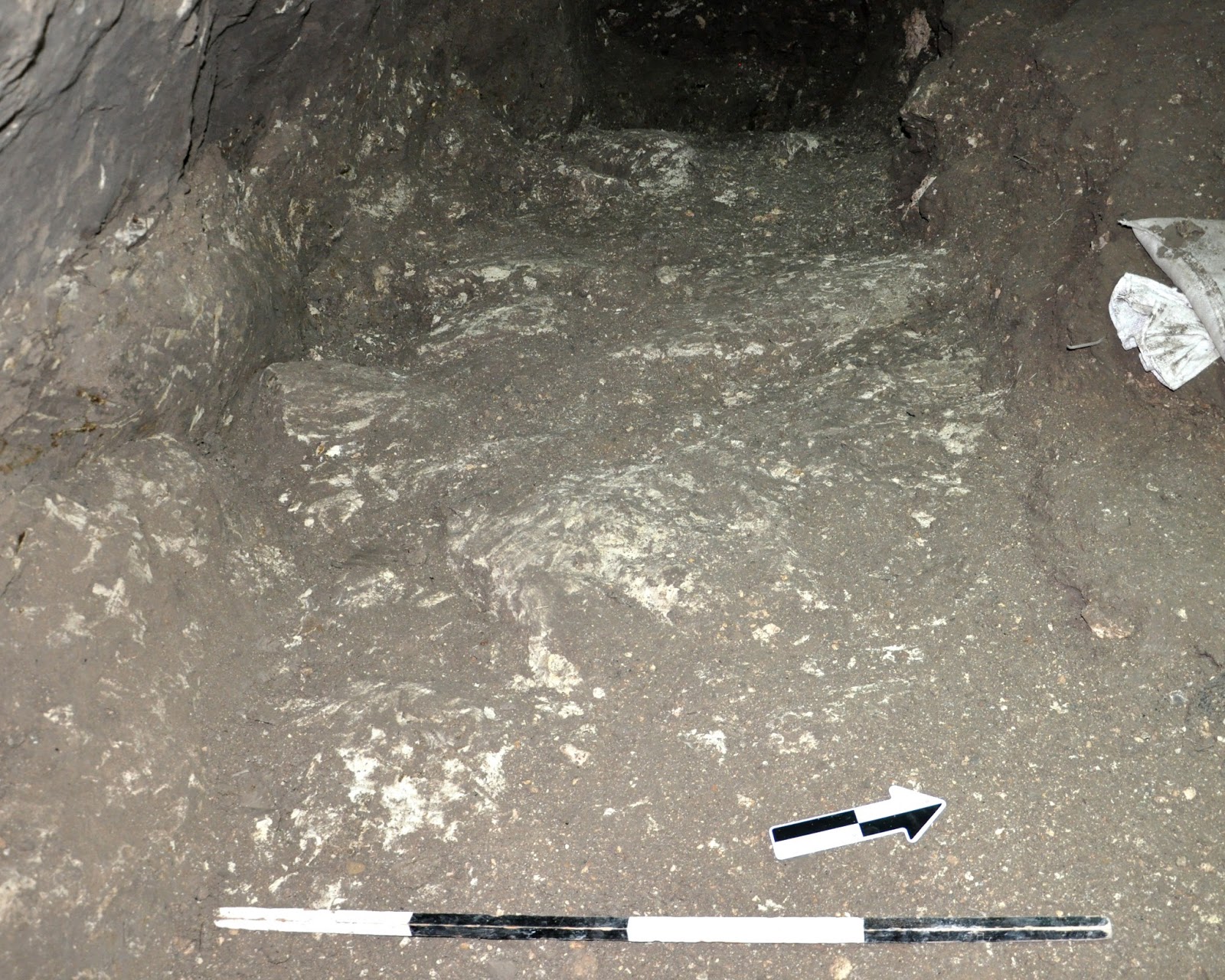
Probe 2 in the Cavern
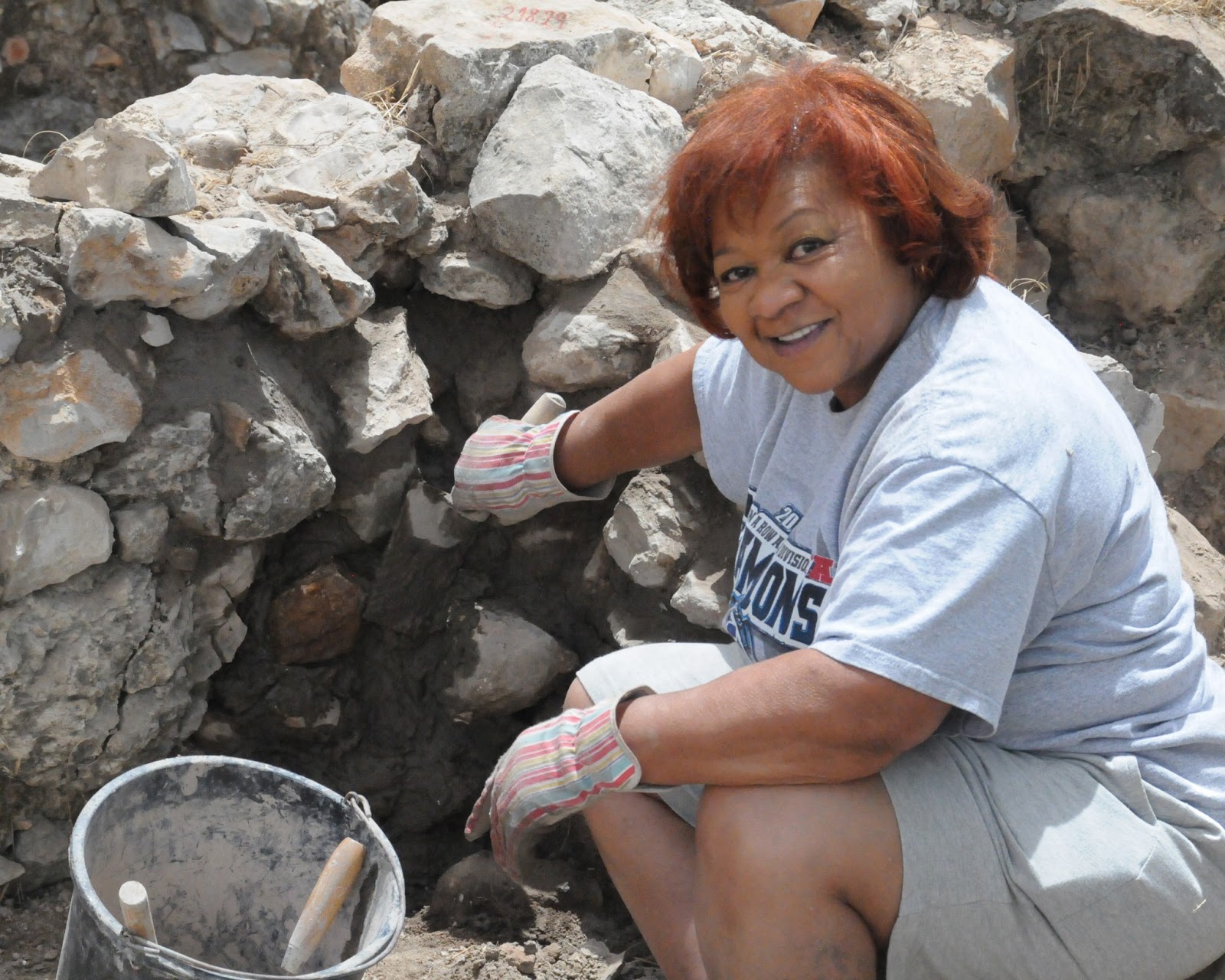
Paulette at the wall

Today the team continued to work on the three causeway probes. By lunchtime, most of the causeway stones had been cleared and the team began digging. Soon they were finding lots of datable pottery. More on that in tomorrow.

Important Visit
Yesterday was a very important day for the Gezer Water System dig. Shaul Goldstein, General Director of the Israel Nature and Parks Authority, toured the Gezer site with Tsvika Tsuk and the NOBTS dig leaders. The tour finale was a trip into the impressive water system. Goldstein seemed impressed with the site and the work being done there. We are grateful that he took time to visit us at Gezer and we are grateful to Tsvika Tsuk for facilitating such an important visit.

Two Items in honor of the Conservation Team
Larry and Paulette are working tirelessly on conservation of the Bronze Age walls. It is a tedious job that requires much attention to detail. As I think about their work, Robert Frost and Ecclesiastes come to mind.

Excerpt from Mending Wall by Robert Frost
Something there is that doesn't love a wall,
That sends the frozen-ground-swell under it,
And spills the upper boulders in the sun,
And makes gaps even two can pass abreast.
The work of hunters is another thing:
I have come after them and made repair
Where they have left not one stone on a stone,
But they would have the rabbit out of hiding,
To please the yelping dogs. The gaps I mean,
No one has seen them made or heard them made,
But at spring mending-time we find them there.


Ecclesiastes 3:1-5
There is a time for everything,
and a season for every activity under the heavens:
a time to be born and a time to die,
a time to plant and a time to uproot,
a time to kill and a time to heal,
a time to tear down and a time to build,
a time to weep and a time to laugh,
a time to mourn and a time to dance,
a time to scatter stones and a time to gather them,

Tuesday, June 4, 2013

June 4: Work, Work, Work – Update 7

By Gary D. Myers
Alyson and Emily at Probe 1

Work continued at the Bronze Age gate, the wall room and MacAlister’s causeway. Before lunch, the causeway was clean enough for photographs and soon the team began cutting through the slabs of stone MacAlister used to cross the soupy area he encountered at the bottom step over 100 years. The team will dig three probe holes through the causeway in hopes of finding material undisturbed by MacAlister.

Traditional archaeology techniques will be used to insure any material found there can be used in dating the water system. One of the main goals of the dig is to find evidence to indicate when the water system was cut and who cut it.

Work also continued on probe 2 inside the cavern. Work on probe 1 was abandoned yesterday because the team encounter multiple layers of chalk about 2 meters into the probe. The probe 2 team also hit a significant layer of chalk (probably roof fall) much deeper into their probe, but dig leaders decided to cut through this layer of chalk in hopes of finding the floor.

Bronze Age Gate
The work area where our efforts are most visible is in the Bronze Age wall rooms. The conservation work is shaping up nicely. In a few days we should have good before and after photos to illustrate the progress. In the other areas, we have many really good starts. In the coming days we hope these good starts will lead to exciting finds. Stay tuned.

Monday, June 3, 2013

June 3: A Step in the Right Direction – Update 6

The Bottom Step
By Gary D. Myers

Only a short blog today because everyone on the Gezer team is tired, very tired. We’ve worked hard and toured hard and today everyone looked a little worn.

The big progress today came in the area of the bottom step of the water system. When the tunnel was cut from the rock a series of steps was cut from the top to the pool below. When MacAlister excavated the system 100+ years ago, he laid a “causeway “ of stone from the bottom step to the mouth of the cavern. Our hope is that ancient material will be found below MacAlister’s causeway. Any material found there could help the team date the water system.  Volunteers also worked to clean the causeway for a photograph tomorrow. After the causeway is thoroughly measured and documented, the team will remove portions of the stones and dig several probes to search for datable artifacts and the water source. Stay tuned.

Week One Video Update with Dr. Dan Warner

The Gezer Team sings “How Great is Our God” in a cistern under the Western Wall in Jerusalem (video courtesy of Brian Mooney)

Sunday, June 2, 2013

June 2: A Very Full Weekend and a Very Full Day – Update 5

By Gary D. Myers
The group had two very long days touring over the weekend. Friday the team tour Caesarea, Megiddo, Capernaum and several other sites near the Galilee. Saturday it was Masada, Swimming in the Dead Sea and Qumran where the Dead Sea Scrolls were found. Both trips were very enjoyable. We ended the evening Saturday with a short worship service back at Neve Shalom.

Sunday, we were back at the Gezer Water System for the first part of a very long day. We worked in the morning at the water system. We worked hard, moved a lot of dirt, but other than that, not much to report.

After lunch and a quick shower, we were off to Jerusalem to the City of David to tour the ancient water system under the oldest part of Jerusalem. It was a very special tour for our guide was none other than Eli Shukron, the archaeologists who excavated the City of David. During the 14 years he excavated there, Shukron found the passage David’s general Joab used to enter the Jebusite city of Jerusalem, the Pool of Siloam and countless other important finds. And the excavations continue. On top of being a the leader of such an important dig, Shukron knows the Bible and believes the stories of the Old Testament. It was a rare treat to spend time with this man.


Near the end of our tour, standing in a cistern below the Western Wall of the Temple Mount, Shukron asked us to sing a song to enjoy the acoustics. We chose “How Great is Our God.” We truly worshiped. The sound of heart-felt worship filled the cistern. And though it was unplanned, it was one of the real highlights of this year’s dig.

Thursday, May 30, 2013

May 30: Look what we found – Update 4

By Gary D. Myers


The work week closed on a high note this first week of the Gezer Water System Expedition. May 30 brought an exciting find.

Shortly before lunch. The workers at the bottom of the tunnel found the elusive last step. Another thrilling discovery. The step was not clean enough to photograph today. Hopefully we will be able to get a good photo early next week. Once the step is cleaned and photographed, the team will begin removing the causeway of stone laid by MacAlister. The dig leaders hope to find datable material, undisturbed by MacAlister, under those stones. This would be helpful in establishing a date for the water system.

Breaking through
The team cutting a vertical probe near the southern wall of the cavern made a break through into the open part of the cavern. The team will continue digging as close to the wall as possible in hopes of discovering an exit. May 30 turned out to be a great day on many fronts at the dig site.

Surprise Visit
At lunch the group received a surprise visit from Mr. Clay Corvin, Vice President for Business Affairs at New Orleans Baptist Theological Seminary. Corvin loves the land of Israel and often leads pilgramages visiting biblical sites throughout the country. It was great to see him at Gezer.

Housekeeping Items
The plan is to upload select first week’s photos over the weekend. Our work week will begin June 2. Look for a new blog on June 2.

Wednesday, May 29, 2013

May 29: Spreading out – Update 3

Sifting for artifacts

By Gary D. Myers
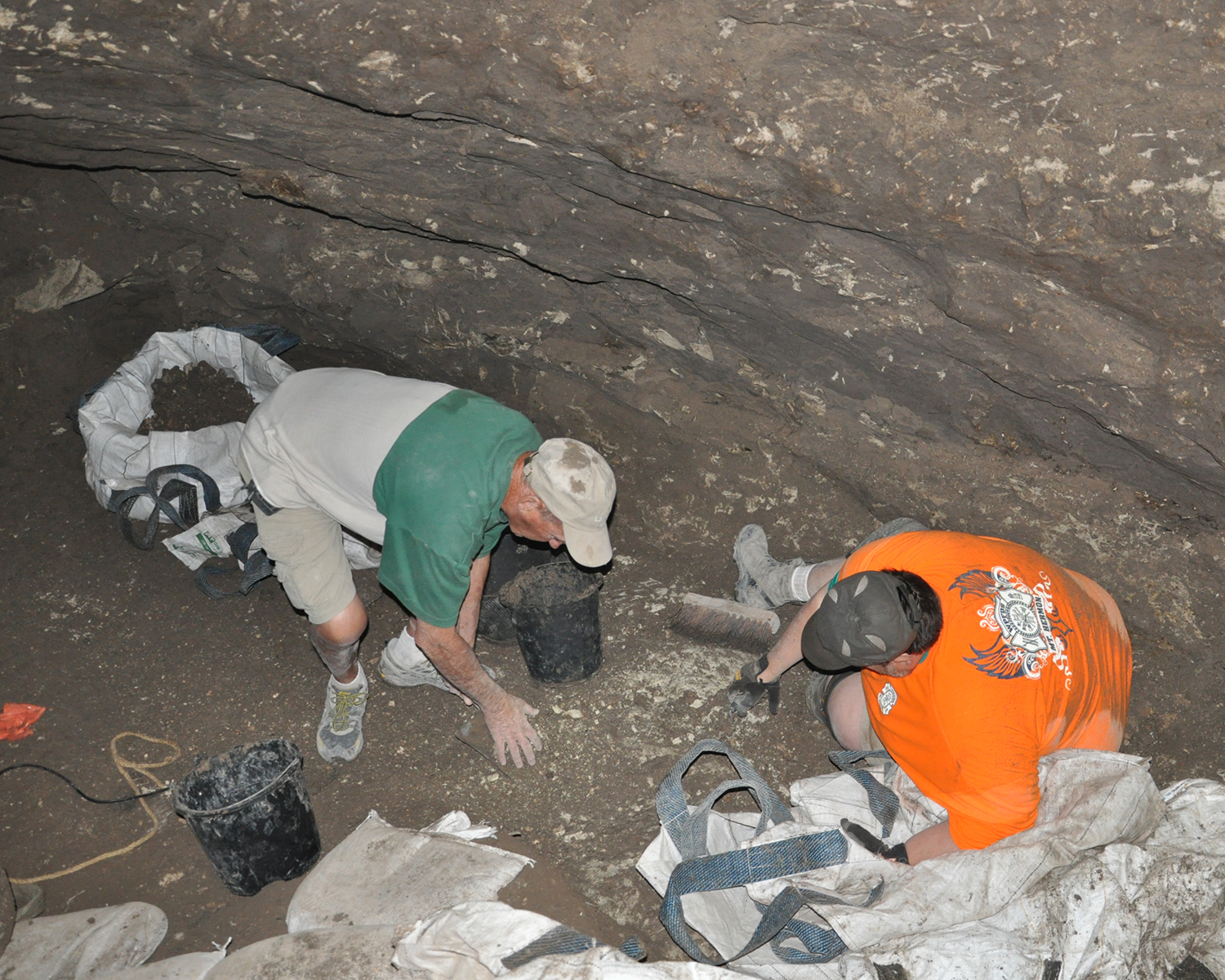
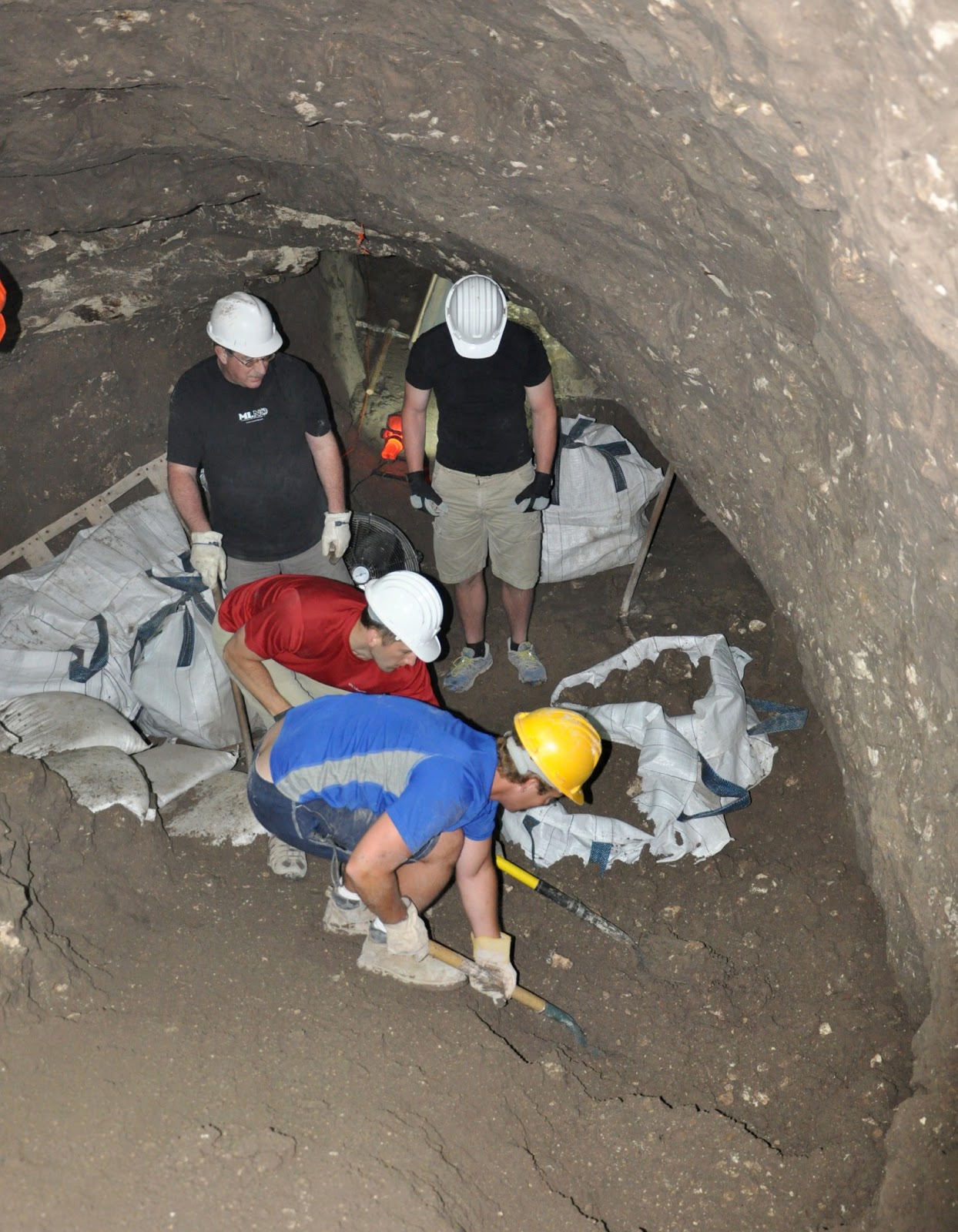
In the last blog I detailed the various areas at which we have been working. Work continued on the conservation of the wall/Canaanite gate area. Digging continued near the location of the elusive bottom step. This team encompasses the largest group people because of the number of workers required to loosen and bag material and run the winch, crane and dumping operation.  And a small team continued to dig to probe/test pits inside the cavern.

Today, we added more work stations and tasks. The team working to reach the steps split due to the lack of digging space. The three that split off of the steps team began cutting a vertical probe along the southern wall of the cavern. This will extend the first vertical probe launched two years ago before the decision was made to angle toward the northern wall where a large open space in the cavern was discovered. The hope is that an exit will be discovered along the Southern wall similar to the exits found at some other ancient water systems. Because this material is from the cavern, the decision was made to sift samples of the dirt to search for pottery. The bag dump team at the top added a few members and is now charged with sifting the material.

With five different operations going on simultaneously, the bag count dropped today. Forty-eight bags of debris were removed – not one of our highest totals, but we are really getting to the most important parts of the dig. Hopefully, we will have news of the step in the near future. Once that is found, focus will shift the area that MacAlister covered with a stone “causeway.” This is the area most likely to render significant artifacts that were left untouched by MacAlister and could help establish a date for the system.

Otherwise, it was another great day at Tel Gezer. The team is working well together and there is a great spirit of fellowship among the group. It is hard, hard work but we are enjoying every minute of it.

Today’s Gezer Passage
Joshua 16:1-10
“(1) The allotment for Joseph began at the Jordan, east of the springs of Jericho, and went up from there through the desert into the hill country of Bethel. (2) It went on from Bethel (that is, Luz ), crossed over to the territory of the Arkites in Ataroth, (3) descended westward to the territory of the Japhletites as far as the region of Lower Beth Horon and on to Gezer, ending at the Mediterranean Sea. (4) So Manasseh and Ephraim, the descendants of Joseph, received their inheritance. (5) This was the territory of Ephraim, according to its clans: The boundary of their inheritance went from Ataroth Addar in the east to Upper Beth Horon (6) and continued to the Mediterranean Sea. From Mikmethath on the north it curved eastward to Taanath Shiloh, passing by it to Janoah on the east. (7) Then it went down from Janoah to Ataroth and Naarah, touched Jericho and came out at the Jordan. (8) From Tappuah the border went west to the Kanah Ravine and ended at the Mediterranean Sea. This was the inheritance of the tribe of the Ephraimites, according to its clans. (9) It also included all the towns and their villages that were set aside for the Ephraimites within the inheritance of the Manassites.( 10) They did not dislodge the Canaanites living in Gezer; to this day the Canaanites live among the people of Ephraim but are required to do forced labor.

--

The Gezer Water System project is co-sponsored by the Israel Nature and Parks Authority and New Orleans Baptist Theological Seminary under the direction of Tsvika Tsuk, chief archaeologist at INPA, and Dan Warner, co-director of the Center for Archaeological Research at NOBTS.
Tuesday, May 28, 2013

In the groove – Update 2

By Gary D. Myers


Building on the momentum from Monday afternoon (May 27), the team established routines and mastered individual jobs on May 28. And though they were digging through difficult, stony material at the bottom of the tunnel, the team pulled out 44 bags before lunch. Things slow considerably after lunch and when the short afternoon session was complete, the daily bag total reached 58. According to some of the veteran diggers at Gezer, the material encountered today was some of the most difficult material to remove – tightly packed cobble stones with very little dirt. No sign of that elusive last step.

Conservation work continued today on the Canaanite gate/wall area and the team’s work is beginning to show. Hopefully in the next few days we will post before and after photos of their progress.

A small team of four begin digging test pits/probes inside the cavern/cave. One probe was started last year late in the dig, a second was started today. The goal is to take these meter square probes all the way to bedrock. Today the probes yielded very little pottery. The one clearly datable piece dated to the Iron Age.
Work will continue on all three fronts tomorrow – the step, the wall conservation, and the cavern probes.

A Little Background
Hopefully the blog is building new readership this year. Since our newer followers may not know much about the Gezer Water System, some background may be in order. Here is a brief explanation of the water system:

Many rock-hewn water systems have been discovered in Israel. The water system in Gezer shares some characteristics with the other water systems like the ones at Hazor and Meggido. These tunnels were built to provide water for the inhabitants of a city during a siege. Even with the similarities, the Gezer system is unique.

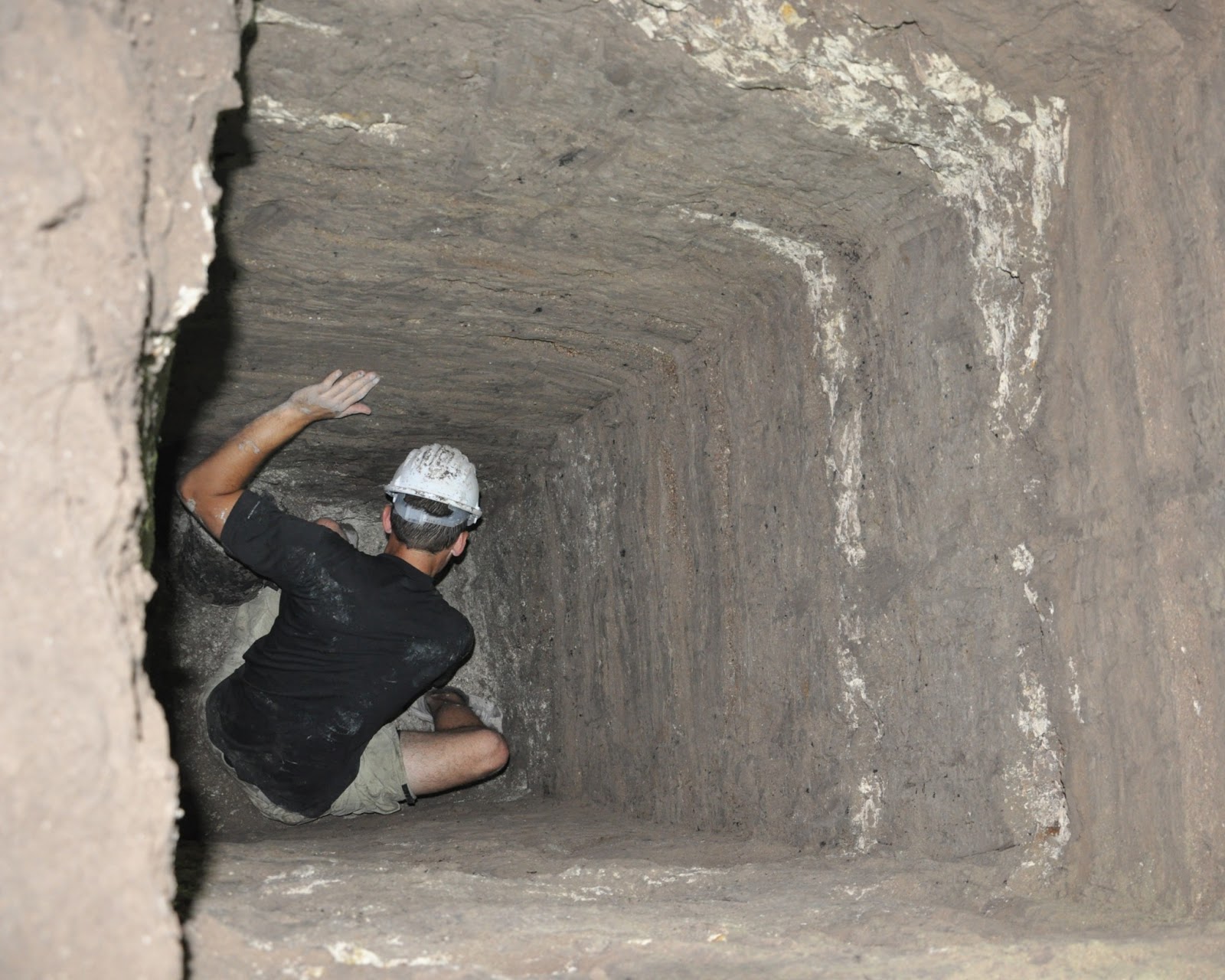
Measuring 12 feet wide by 24 feet tall, the Gezer system is massive - much larger than the other water systems in Israel. The tunnel, cut at the 39 degree slope, stretches over 130 feet to the bottom. Some archaeologists believe this water system was cut by the Canaanites. Others date it much later to the time of Ahab. One goal of the current expedition is to settle this debate. So far, the team has not found conclusive evidence to support either theory.

The Process for removing debris from the tunnel
Newer readers will also be interested in knowing how debris is moved from the bottom of the tunnel. The work is accomplished in five steps.


  1. Three to five people use picks and shovels to loosen the dirt, mud and rocks and from the tunnel.
  2. The debris is loaded into large fabric bags. Each bag holds approximately 400 lbs. of material.
  3. At the mouth of the water system a large winch is used to drag the bags up the steep grade of the tunnel. Two people are needed to bring the cable down to the work area, another person operates the winch.
  4. At the mouth a crane is used to pull the bags up to the dump site. One person attaches the bag to the crane hold and two are need to signal the crane operator.
  5. The bags are dropped at the dump site where two people work to empty the bags. At the current dump site another spotter is needed to facilitate the drop.
The Gezer Water System project is co-sponsored by the Israel Nature and Parks Authority and New Orleans Baptist Theological Seminary under the direction of Tsvika Tsuk, chief archaeologist at INPA, and Dan Warner, co-director of the Center for Archaeological Research at NOBTS.

Monday, May 27, 2013

Gezer 2013: Moving dirt again – Update One

By Gary D. Myers

Team Gezer did its share of prepping, waiting, and digging during the second day of the 2013 dig. Fewer people were struggling with lingering jet lag and we were able to accomplish a lot of work.

The Prepping
The morning started with more sandbags. We prepared about 30 sandbags for the steps inside the tunnel. Filling the bags was hard work, but carrying the bags down into the tunnel was downright difficult. Just as we finished placing the bags to create a fine looking set of steps, a group of geologists arrived to inspect the cave/cavern at the end of the water system and work halted.

The Waiting
The men inspected the cavern and offered safety pointers in shoring up the ceiling in a few locations. The geologists said that, for the most part, the ceiling was stable. Dr. Jim Parker still had lingering doubts about the origin of the cavern – namely whether or not it was natural. After going back and forth on the issue last dig season, the consensus fell in favor of a natural cave. R.A.S. MacAlister, who cleared the water system in the early 1900s, believed that it was natural. And with so much roof collapse in the past 100 years, the cavern’s origin was difficult to determine. Parker still had reservations. After careful study that lasted several hours, the geologists concluded that the cavern is most likely man-made. This new development was worth the wait and posed many additional questions and possibilities which I hope to address at a later date.

The Digging
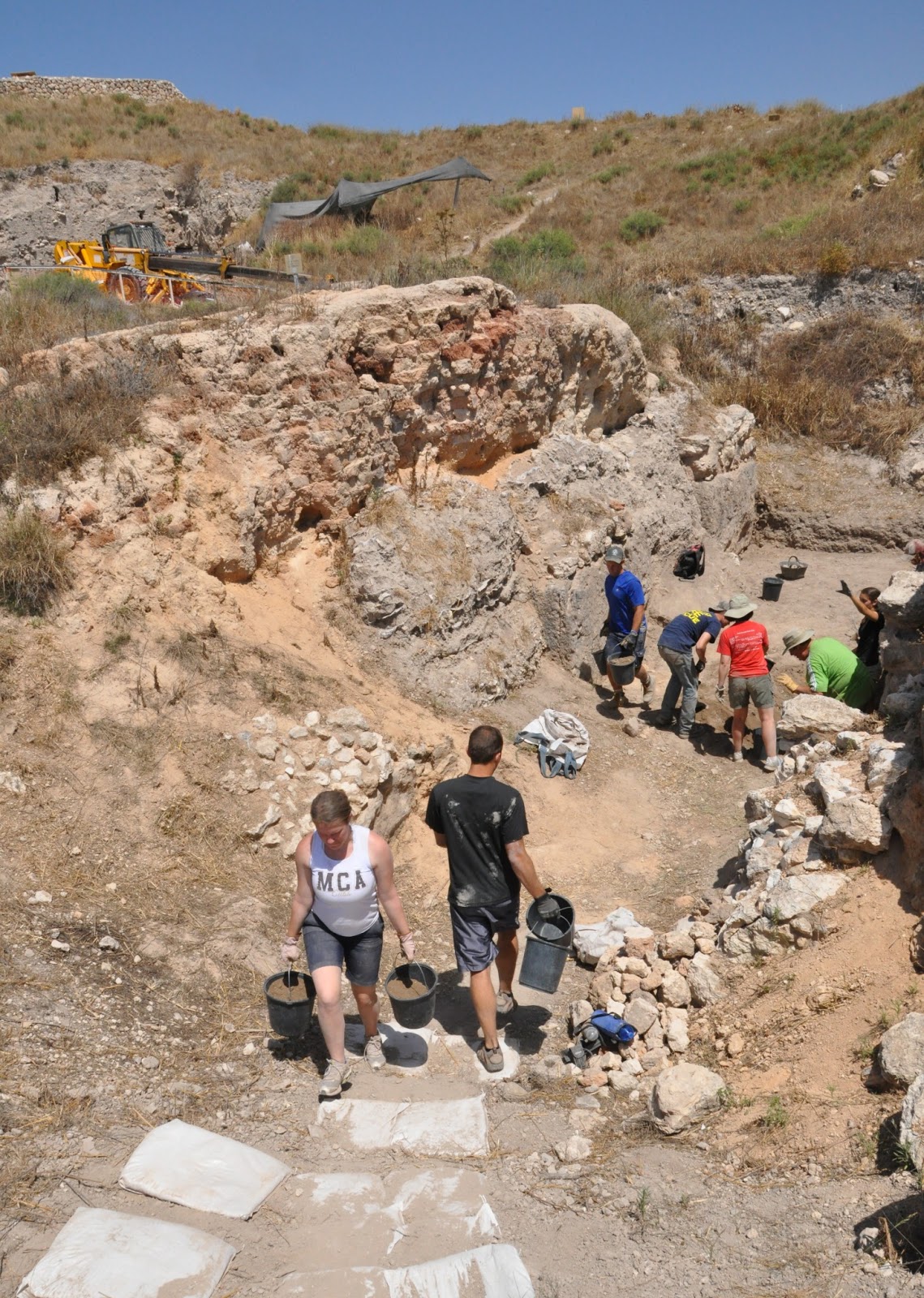
After lunch the team divided. Some continued work on conservation and restoration of the Bronze Age Canaanite gate system and wall. Others began removing dirt from the tunnel. The first task on this year’s agenda is to search for the bottom step of the tunnel. The tunnel has 84 rock-hewn steps leading from the top down to the water source at the bottom. Last year, near the end of the dig the team found the large rocks MacAlister laid across the pool (which he called a causeway). Today the team dug back toward the tunnel opening (opposite the cavern opening) working all the way down to the stones MacAlister placed over the water source. By repeating this process for several more feet, the team should reach that bottom step. In fact, we are very optimistic about reaching the step by tomorrow or Wednesday. If you have followed this blog in past years, you will know that we have been optimistic before only to be disappointed. We’ll keep you posted. Nevertheless, it will be thrilling to find that step. Eventually we will remove the causeway stones and search the dirt below for datable objects. Plans also call for additional probes in the cavern.

Even though we were training a new work crew and only removed dirt for half a day, we were able to remove 32 bags of material – mostly rocks and stones. All in all it was a great day at the tel.

Time has been in short supply, hopefully we can upload more photographs tomorrow.

Today's Gezer Passage
Joshua 10:31-33
“Then Joshua and all Israel with him moved on from Libnah to Lachish; he took up positions against it and attacked it. The Lord gave Lachish into Israel’s hands, and Joshua took it on the second day. The city and everyone in it he put to the sword, just as he had done to Libnah. Meanwhile, Horam king of Gezer had come up to help Lachish, but Joshua defeated him and his army—until no survivors were left.”


--

The Gezer Water System project is co-sponsored by the Israel Nature and Parks Authority and New Orleans Baptist Theological Seminary under the direction of Tsvika Tsuk, chief archaeologist at INPA, and Dan Warner, co-director of the Center for Archaeological Research at NOBTS.

Sunday, May 26, 2013

Let the Digging Begin -- Update .5


The 2013 season of the Gezer Water System Expedition sponsored by New Orleans Baptist Theological  eminary and the Israel Nature and Parks Authority has begun. This first update will be very brief – not even worthy of being called Update One. Instead we’ll call this Update .5. It is short, first and foremost, due to the fact that today was a set up day at the dig site. The first timers spent over an hour touring Tel Gezer while those who had been before retrieved items from the storage unit near the tel. We moved chairs, tables, tools, buckets, shade cloth, and many other items to the base tent. Then, as the tour group finished, everyone began the task of installing the safety measures – catch fences and sand bags (lots of sand bags) – on the fences and paths leading to the mouth of the water system. After lunch, set up continued inside and outside the tunnel. And more set up awaits us tomorrow.


One exciting development of this year’s dig is that our team will participate in conservation work on sections of the Bronze Age, Canaanite gate complex and walls near the mouth of the water system (see photo). Conservation work began today. Look for more information on this conservation work in a later blog.

Another reason the blog is short is due to the serious case of jet lag the blog’s author is experiencing. My flight arrived at 5 p.m. May 25 and we were headed to the dig site this morning at 6 a.m. Any typos you see here probably have little to do with jet lag, but I will blame those on my tired eyes and aching head.

Thank you for following the Gezer Dig blog this dig season. Please subscribe to the blog via to receive notifications as soon as our blogs post each day. And please, feel free to share the post with anyone who may have an interest in archaeology and biblical studies. We are trying to get the word out about this fabulous water system.


Hopefully tomorrow will bring more news. Until then … shalom. 

Tuesday, October 30, 2012

The Gezer Water System Expedition 2013

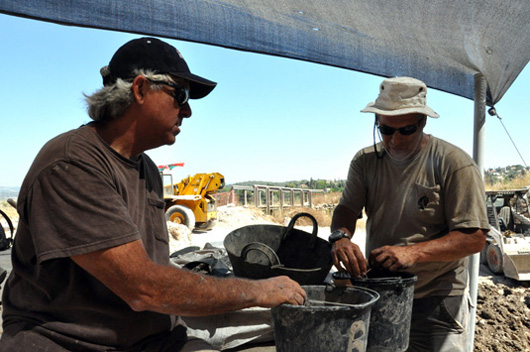
Dan Warner of NOBTS, left, and Tsvika Tsuk of INPA, sort pottery shards at Gezer.


May 26-June 15, 2013 
Sponsored by the Israel Nature and Parks Authority and The Center for Archaeological Research  at New Orleans Baptist Theological Seminary 

The Project: Participate in the excavation of an ancient Canaanite water system which could date to the time of Abraham. The project is co-sponsored by the Israel Nature and Parks and Authority and New Orleans Baptist Theological Seminary under the direction of Tsvika Tsuk, chief archaeologist at INPA, and Dan Warner, CAR co-director at NOBTS.

Dates: May 26 - June 15, 2013. Volunteers should plan to arrive no later than May 25.

Cost: $1650 for the 3-week season, or $550 per week + airfare. Costs cover room, board and weekend travel. Preference will be given to three-week participants. Participants are responsible for their own flights to and from Israel. The dig will arrange airport pickup.

Weekend Travel: The expedition will arrange several field trips covering key areas of Israel.

Accommodations: Volunteers will be housed in air-conditioned rooms at the Neve Shalom Guest House, with three to four persons per room.

Academic Credit: Undergraduate or graduate course credit for up to 6 semester hours is available. Additional tuition fees apply.

More Information: Dr. Dan Warner (dwarner@nobts.edu) or Dr. Dennis Cole (rdcole@nobts.edu) or visit the NOBTS Center for Archaeological Research website at www.nobts.edu/archaeologycenter/