Monday, May 23, 2016

Tel Gezer 2016 – Day Two

By Gary D. Myers

Setup days are always tough. It’s hot, dirty and we are all a bit out of physical shape when the excavation begins. We round up the tools and equipment, set up camp, raise shade cloth, make an unreasonable amount of sandbags, and a thousand other tasks. It takes lots of time and it is some of the hardest work we do during the excavation.

Day two at the Tel Gezer Water System Exploration brought much cooler temperatures and more setup at all of our major work areas. In the water system (Fields A and B), the team repaired and installed the wooden stairs which allow access to the tunnel. Others began the long process of placing sandbags over the ancient steps – 85 steps total, each requiring two to four sandbags. Once setup is complete, the team will begin clearing out the NW quadrant of the pool (Area A). Removing this will expose the full width of the pool area at its shallowest point.

Just as the team began laying the sandbags, we encountered the first real problem of the season. The switch used to control the winch shorted out and, for a time, we were unable lower additional sandbags into the tunnel. This minor setback was repaired within two to two and a half hours, but the lost time means at least one more set-up day in the water system.

Other fun tasks of the day included clearing weeds from the Middle Bronze Age wall and gate area and covering the long, black water pipe with weeds to help maintain a tolerable water temperature.

In Field C (sometimes referred to as “Eli’s House,” last season), setup was complete on day one. Today the crew began clearing the area and digging. The goal of this work is to determine how these structures relate to the gate and the water system. This year the team opened a new surface excavation area near the Canaanite Gate (Southern Gate). Known as Field D, the new area could help provide a clearer picture of the relationship between the gate, the water system and the structures in Field C. According to the archaeologists on site, portions of these two areas have never been excavated. Other portions have been excavated, but have not been fully described or photographed for the archaeological record.

With setup nearly complete, the excitement is building among the Tel Gezer participants. As many of you know, we will not be able to publish much about our most important finds. Information about the important finds will trickle out in academic publications and later in the final dig publication. So bear with us. We are hoping to answer important questions about Gezer this year. We will share as much as we can.


Welcome to Tel Gezer!


Setting up at the tent.


Our main tent at the entrance.


Digging at Area D.


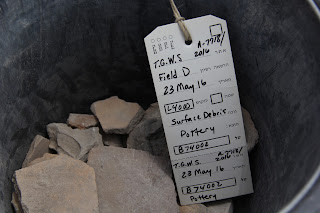
Pottery findings from around the Canaanite Gate.


The Canaanite Gate at Area D.


Digging at Area D.

Sunday, May 22, 2016

Gezer 2016 Update One

By Sarah Simon

Today marked the beginning of the 2016 dig season at Tel Gezer. We arrived on site, and the first-year participants toured the tel while the others began setting up. The day continued with set-up tasks, such as making and placing sandbags, shade areas and lighting the water system, among other activities.


Tel Gezer was a significant city in ancient Israel. It is located in the Shephelah, and was a heavily guarded city. The Mediterranean can be seen from Gezer in this photo.


Gezer is the only Canaanite city where standing stones have been unearthed.


A wider view of the standing stones.


Dr. Dan Warner giving an explanation to the first-year diggers.


The group of newcomers touring the site. 


Dr. Warner explaining the site.


This is the Solomonic gate at the entrance to the city.


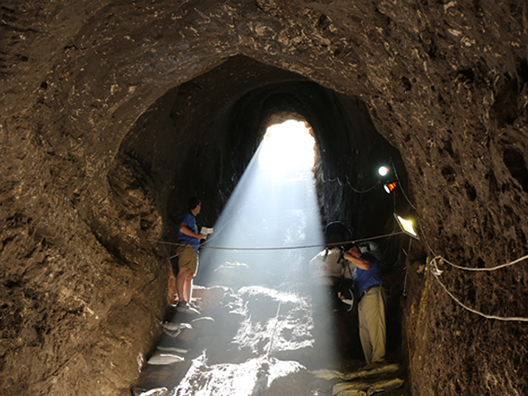
Going down into the water system.


The cavernous water system as lighting is being set up.


Sand-bagging and sending the bags down to the walkway below by crane.


The set-up is taking place for sifting under the tent.


The archaeologists talking excavation.


A wide view of the area where the crew is working.


Monday, October 5, 2015

Interested in archaeology: Join the 2016 Tel Gezer expedition


Gezer, Israel May 22-June 10, 2016

About the Project: Participate in New Orleans Seminary’s archaeological excavation of an ancient Canaanite water system (the largest of its kind) at Tel Gezer in Israel and the investigation of structures related to the Bronze Age Canaanite Gate.

Dates: May 22 - June 10, 2016. Volunteers should plan to arrive no later than May 21, and those working all three weeks should plan departures for June 11 or 12.

Cost: $1950 for the three-week season, or $650 per week (Extra days $100 / day) + airfare. Costs cover room, board and weekend travel. Preference will be given to three-week participants. Participants are responsible for their own flights to and from Israel. The dig will arrange airport pickup.

Weekend Travel: The expedition will arrange several field trips covering key regions and archaeological sites of Israel. Weekend travel costs are included in the excavation pricing.

Accommodations: Volunteers will be housed in air-conditioned rooms at the Neve Shalom Guest House, with three to four persons per room.

Academic Credit: Undergraduate or graduate course credit for up to 6 semester hours is available. Standard tuition cost and fees apply.

For More Information: About the dig, contact Dr. Dan Warner (dwarner@nobts.edu) or Dr. Dennis Cole (rdcole@nobts.edu), or visit Moskau Institute and Center for Archaeological Research website www. nobts.edu/archaeologycenter/


The ancient city of Gezer, located between Jerusalem and the modern-day city of Tel Aviv, was a Canaanite city-state that reached its height of importance in the Middle and Late Bronze Age. Much of Gezer’s importance derived from its location near the Via Maris, an important ancient trade route. The Bible mentions the city 14 times in the Old Testament. In one of the more important Gezer entries, the Bible reports that an Egyptian pharaoh conquered Gezer and gave it to Solomon as a dowry (1 Kings 9:16). The account records that Solomon rebuilt and fortified Gezer along with Hazor and Megiddo.